
Contact Our Team

Today’s batteries were made for air-conditioned spaces, not for the real world. Take your cellphone to the beach on a sweltering afternoon and it will shut off to prevent overheating. If it kept operating at high temperature, the battery would gas out and swell into a “spicy pillow”, an endearing slang for a massive safety risk. Take your EV out on a cold day, and the range is less than half of its nameplate. While it might be an inconvenience for the regular person, such narrow battery operational temperatures already have massive geopolitical, economic and technological implications today. Installation of grid storage batteries in desert climates has become prohibitively expensive and intractable due to need for expensive HVAC systems and unwieldy insurance policies. Military operations are severely compromised in Arctic climates. Data center battery systems cannot deliver the expected lifetime warranty. Space systems require an excessive payload for battery thermal management. Lithium-ion batteries have been around for nearly 40 years now, so why is this problem still so pervasive?
Virtually every single lithium-ion battery in the world has contained, for all these past decades, a small set of 4-5 electrolyte molecules: organic carbonate solvents. Whether it’s your EV, residential battery, laptop/cellphone, or state-located battery energy storage system (BESS), all these systems carry a legacy technology that intrinsically prevents batteries from operating well outside of a narrow “room temperature” range. This temperature range is ultimately defined by these pervasive carbonate solvents.
Why are electrolytes the culprit?
For a battery to operate, it must enable efficient flow of ions between a positive electrode (a cathode) and a negative electrode (an anode). This transport occurs within an electrolyte (a solution of salts, solvents, and additives) which controls how quickly ions can flow from one electrode to the other, and how these ions interface with the electrodes (also known as “electrode-electrolyte interphase”, or EEI). If transport is poor, the battery will display excessive resistance that will stop it from working. These limitations are therefore related to the initial impedance/overpotential of the bulk electrolyte, electrode-electrolyte interface, and the efficient transport of ions within the electrolyte (Figure 1). The total energy of the cell (in Wh) is the product of the voltage of the cell and the total capacity.

The better the transport of ions in the electrolyte, the more capacity can be transferred through the electrolyte to be extracted from the cell (in Ah). However, if the impedance of the cell is too high, the cell voltage may drop below a practical limit, limiting the amount of energy that the cell can deliver. In the case of today’s carbonate-based electrolytes, the implication is that, at low temperatures, the impedance is so large that the cell fails to operate at all in temperatures below 0 oC.
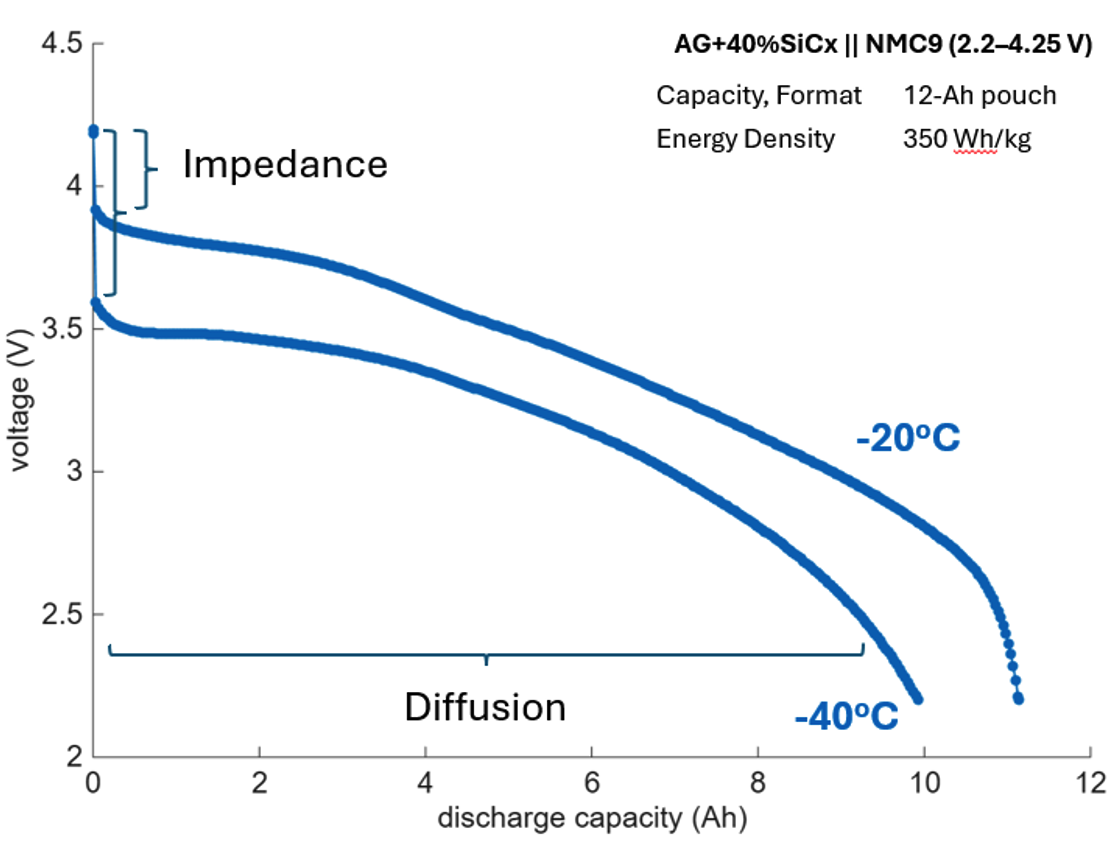
Figure 1. Low temperature discharge of a cell developed using Elementium’s electrolytes.
Carbonates intensify these issues at low temperatures for three main reasons.
i) carbonates freeze at low temperatures, with two of the most common carbonates (EC and DMC) having freezing points above 0 oC. Consequently, the electrolyte turns solid even at moderately low temperatures, blocking all Li transport;
ii) the ionic conductivity of carbonate-based electrolytes decreases rapidly at low temperatures due to an increase in viscosity, hindering efficient flow of ions through the electrolyte;
iii) the impedance at the EEI in carbonate-based electrolytes is excessively high at low temperatures, making it difficult for ions to be transferred from the electrolyte to the electrode.
All these pernicious properties of carbonates result in their poor performance at low temperatures. A clear way of visualizing the combination of these effects into the overall cell impedance is through the electrochemical impedance spectroscopy (EIS) in a relevant cell. Figure 2 shows the cell + electrolyte resistance as a function of temperature for a baseline electrolyte (which was verified by us to have exceptional performance at -40 oC) compared to a low temperature Elementium electrolyte. For the baseline electrolyte, overall cell resistance of the electrolyte increases significantly as temperature decreases, up to an inflection point, where the electrolyte completely blocks ion transport around -60 oC. The inflection point corresponds to the freezing point of the electrolyte solution inside of the cell, a common issue in conventional electrolytes.
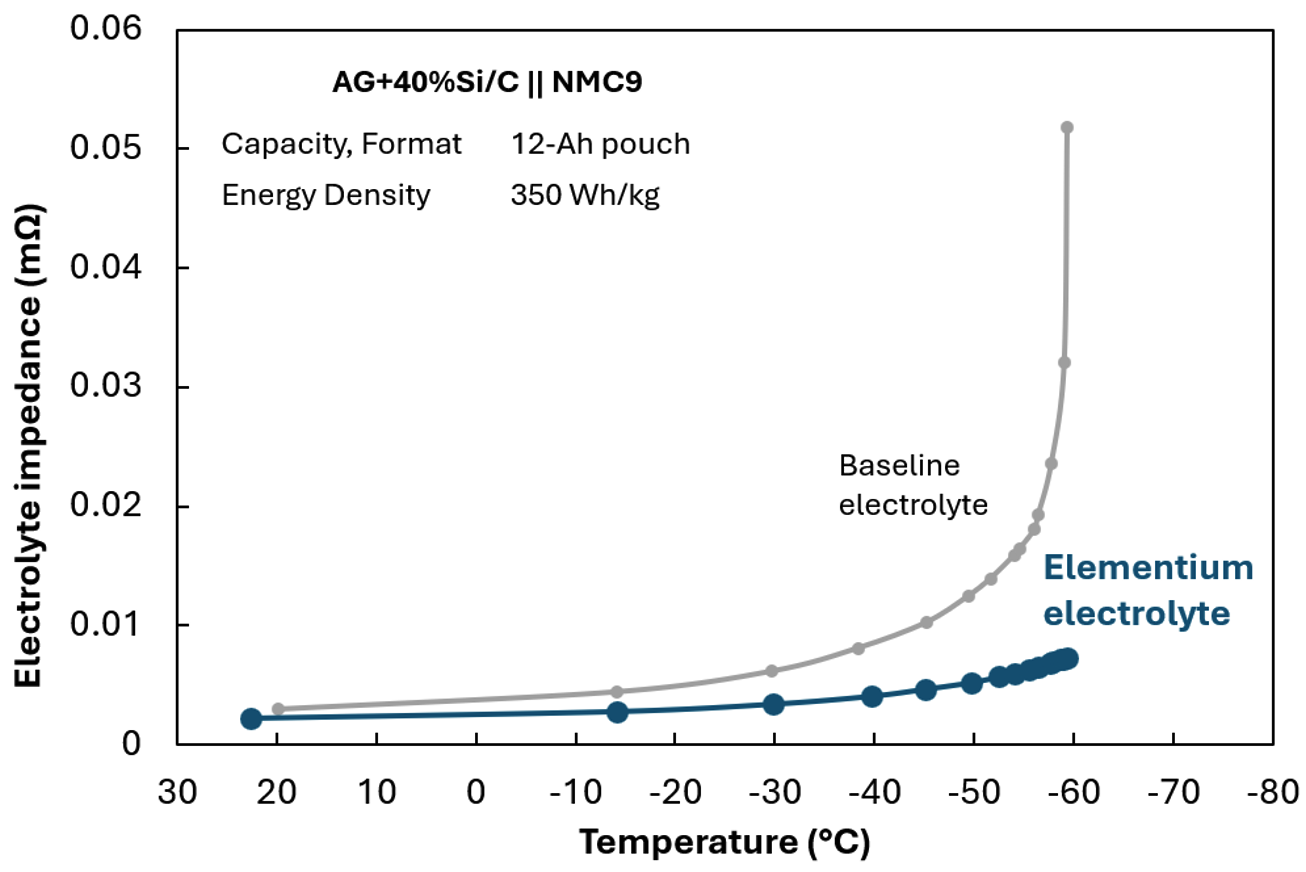
Figure 2. Electrochemical impedance spectroscopy data collected in cells developed by Elementium. The Elementium electrolyte displayed was optimized for -60 oC operation in high energy density pouch cell.
Why hasn’t this been solved in 40 years?
Carbonates have been in continuous commercial use since the release of the first lithium-ion battery in 1991. Since then, attempts to solve the low temperature problem have identified the electrolyte as the key impediment to achieving low temperature functionality. New electrolytes have been developed that partly address the shortcomings of carbonates by introducing new classes of molecules with small molecular weights. These molecules have low melting points (and thus do not freeze as easily as carbonates). However, they are also extremely volatile, requiring substantial cell engineering for them to operate safely. Therefore, the low temperature batteries of today are overwhelmingly packaged in small cylindrical cans (akin to AA batteries) to contain vapor pressure buildup and potential evaporation of the electrolyte solvents. These small cylindrical cans also retain heat exceptionally well, a beneficial property as self-heating improves ion transfer kinetics at low temperatures. However, these small cylindrical cans have limited energy density (generally <<300 Wh/kg) compared to more versatile formats (such as pouches, prismatic and larger cylindrical cans) and thus have limited applicability (Figure 3).
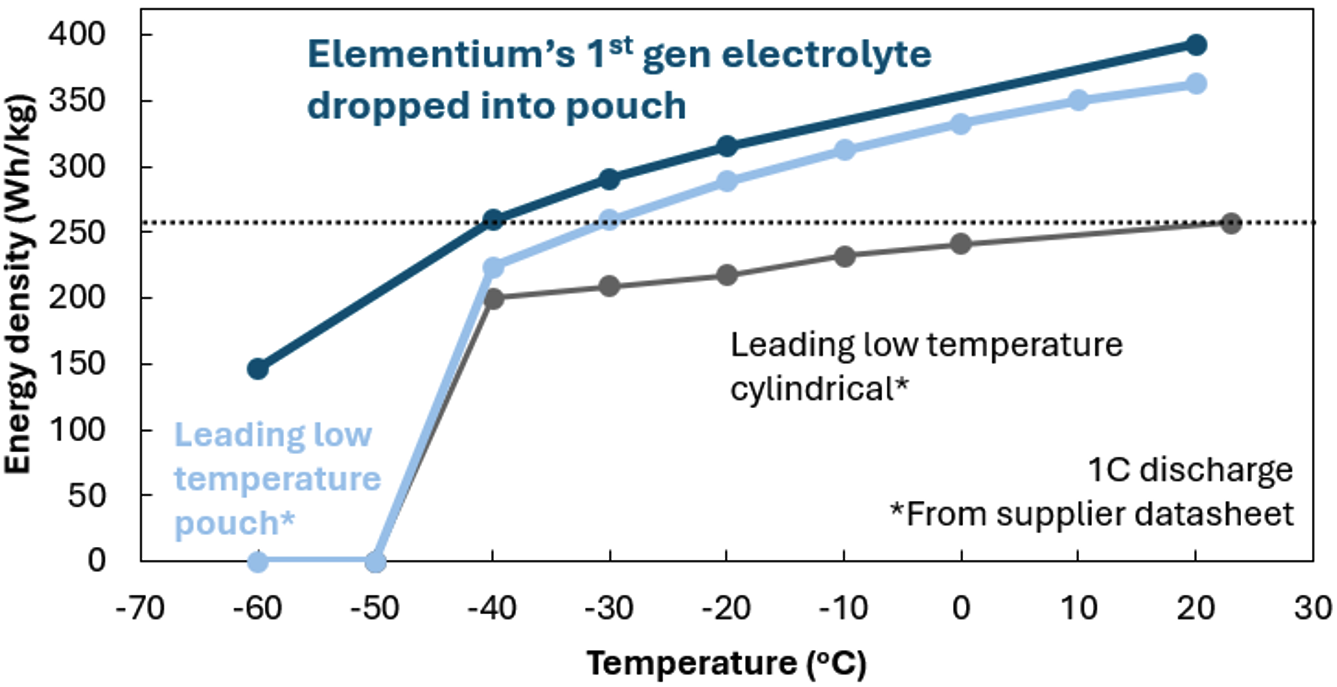
Figure 3. Comparison of energy density as a function of temperature for high energy density pouch and cylindrical cells. In a pouch, Elementium’s 1st gen low temperature electrolyte delivers a comparable energy density at -40 oC to what a market leader cylindrical cell delivers at room temperature.
And while they facilitate bulk ion flow at low temperature, they still struggle to operate below -20 oC due to high impedance EEIs at low temperatures. As such, extreme low temperature operation has remained unachievable for high energy density pouch and prismatic cells.
While these approaches have enabled batteries to operate at moderately low temperatures (e.g., -20 oC to -40 oC), it often comes with significant tradeoffs that most battery end-users are unwilling to make. Notably, conventional low temperature solutions used commercially today also show poor high temperature and high voltage performance compared to their carbonate counterparts. Other emerging electrolyte technologies, such as solid and even gas-based electrolytes, promise low temperature performance, but come at a hefty cost, a need to rebuild the cell manufacturing infrastructure and reengineer the battery and/or pack. They have also, so far, failed to demonstrate the scalability, supply chain, economics, and performance of liquid-electrolyte-based commercial cells even after decades of R&D.
What Elementium does different
Just like legacy electrolytes, Elementium’s electrolytes are still liquid. Elementium leverages a set of ~6 proprietary molecules to tailor the electrolyte to different operating conditions and cell chemistries. Our proprietary molecules have distinct physicochemical properties that enable them to operate inside a battery imparting unique and exceptional functionality
- Elementium’s electrolytes retain high conductivity even at very low temperatures.
- Elementium’s electrolytes lead to the formation of a thin, low impedance electrode-electrolyte interfaces (EEIs).
- Elementium’s electrolytes carry the same, or superior, rheological properties as traditional electrolytes, enabling true drop-in compatibility with existing cell manufacturing infrastructure.
- Elementium’s molecules are significantly less volatile than those traditionally used in low temperature applications, enabling their use in all cell formats and not just small cylindrical cans, including large pouch and prismatic cells typically employed in grid storage and EV applications.
At low temperatures, minimizing cell impedance and enabling fast ion transport is key, and where Elementium’s electrolytes excel. The same equipment, filling, and formation procedures used for conventional electrolytes can be applied throughout the entire manufacturing process. In many cases, because our molecules are not volatile, significant vacuum can be pulled to accelerate wetting/formation even in large-format cells.
Putting Elementium’s electrolyte to the test
The properties that Elementium’s molecules deliver to the electrolyte enable unparalleled low- and high-temperature performance dropped directly into current production batteries, delivering “next-generation” performance today, and not “within a decade”. Elementium has developed multiple formulations to sustain low temperature operation.
Elementium’s IonPro Edge electrolyte is being piloted to enable low temperature operation in current and next-generation commercial cells. In high energy density pouch cells qualified by Elementium’s customers, IonProEdge has demonstrated exceptional cyclability even under extreme conditions, capable of repeated >2,000 cycles at 0 oC under 0.5C/3C full depth-of-discharge cycles without any external heating (Figure 5). This level of low temperature was unprecedented in high energy density pouch cells.
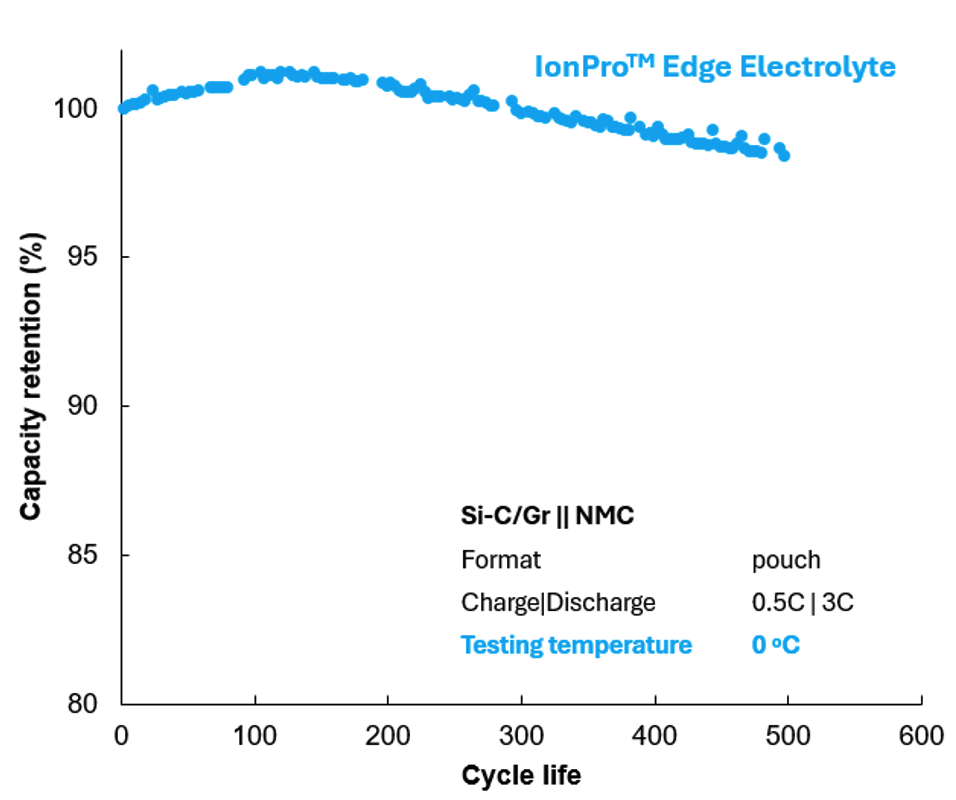
Figure 5. Customer verification of IonProEdge’s performance in customer’s high energy density pouch cells.
What’s next?
Beyond extending the low temperature performance, Elementium’s electrolytes can also sustain exceptional high temperature performance because our molecules are chemically and oxidatively stable even at extreme temperatures. For example, IonPro Edge, the same formulation able to deliver >2,000 cycles at 0 oC, has virtually unlimited shelf life, can sustain months at >60 oC without degradation, and, importantly, does not swell even at end of life (EOL), as shown in Figure 6.
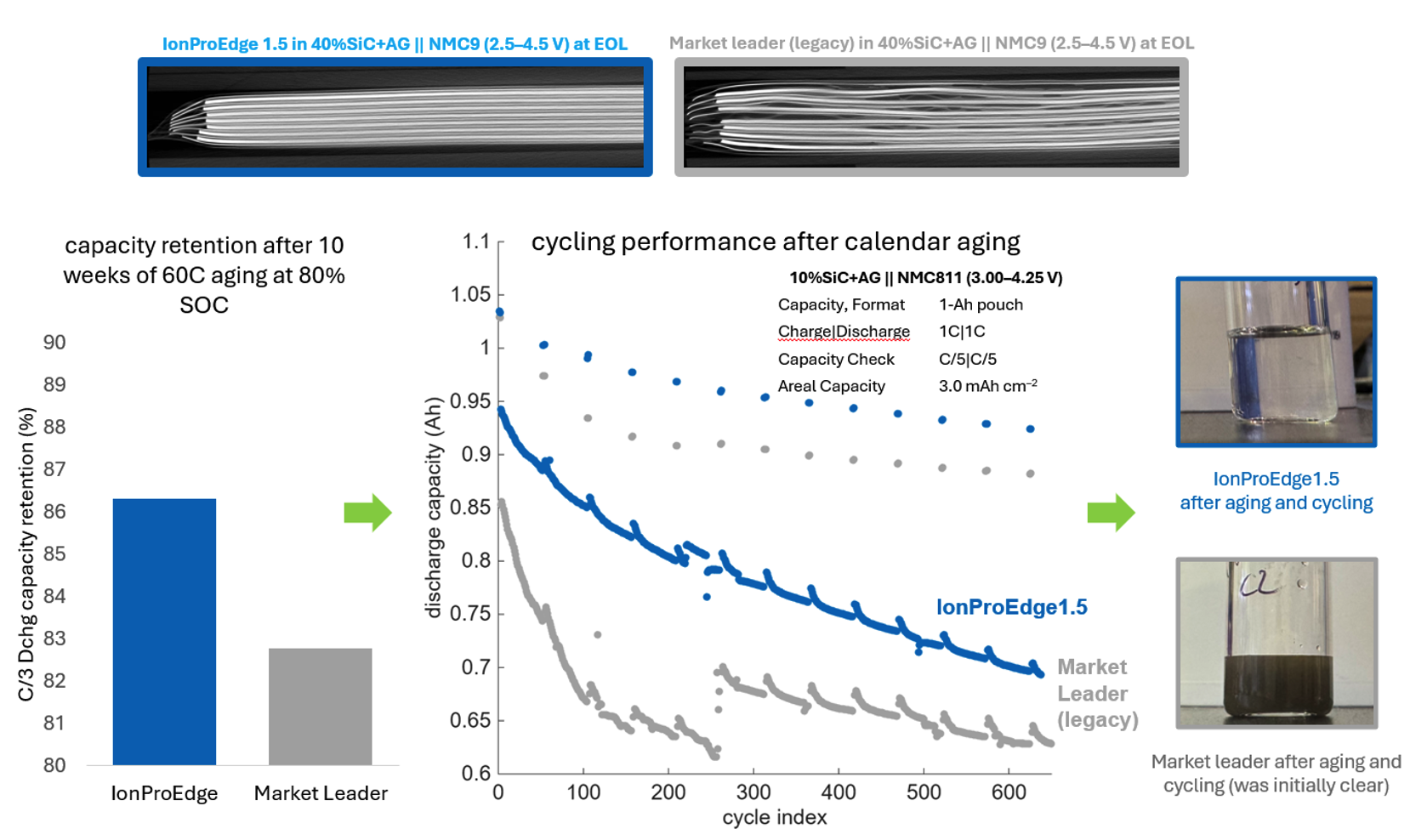
Figure 6. Top: Computerized tomography (CT) imaging of cells at end of life after aggressive testing with Elementium’s IonProEdge compared to a legacy electrolyte. Legacy electrolyte shows clear delamination of cell’s layers, indicative of swelling and gassing characteristic of legacy electrolyte decomposition. Bottom: high temperature testing of IonProEdge: capacity retention after 10 week storage at 60 oC, followed by 1C/1C cycling, followed by electrolyte extraction post-mortem. Chemical analysis of the electrolyte post-mortem shows virtually zero degradation of the electrolyte, except for some limited salt consumption. Legacy electrolyte fully degraded after the test.
Unlocking extreme battery operation in current commercial cells through intelligent electrolyte design has been Elementium’s modus operandi. Are you working on a battery product that could benefit from a wider operating temperature range? We have solutions that can extend your operating temperature as low as -60oC. We’d welcome the conversation. Reach out to Elementium at [email protected].